


Cash flow issues are not always caused by late payments from customers. Sometimes they begin with payables that your team cannot see clearly.
Vendor payments are part of freight forwarders’ day-to-day financial operations. Transportation companies, international agents, customs partners, warehouses, carriers, and service providers all generate payable obligations. On the surface, everything may appear manageable. Invoices are recorded, payments are scheduled, and reports are available within CargoWise.
But the real question is whether your finance team can quickly identify what is outstanding, what is overdue, which vendors require attention, and where payment risk is increasing.
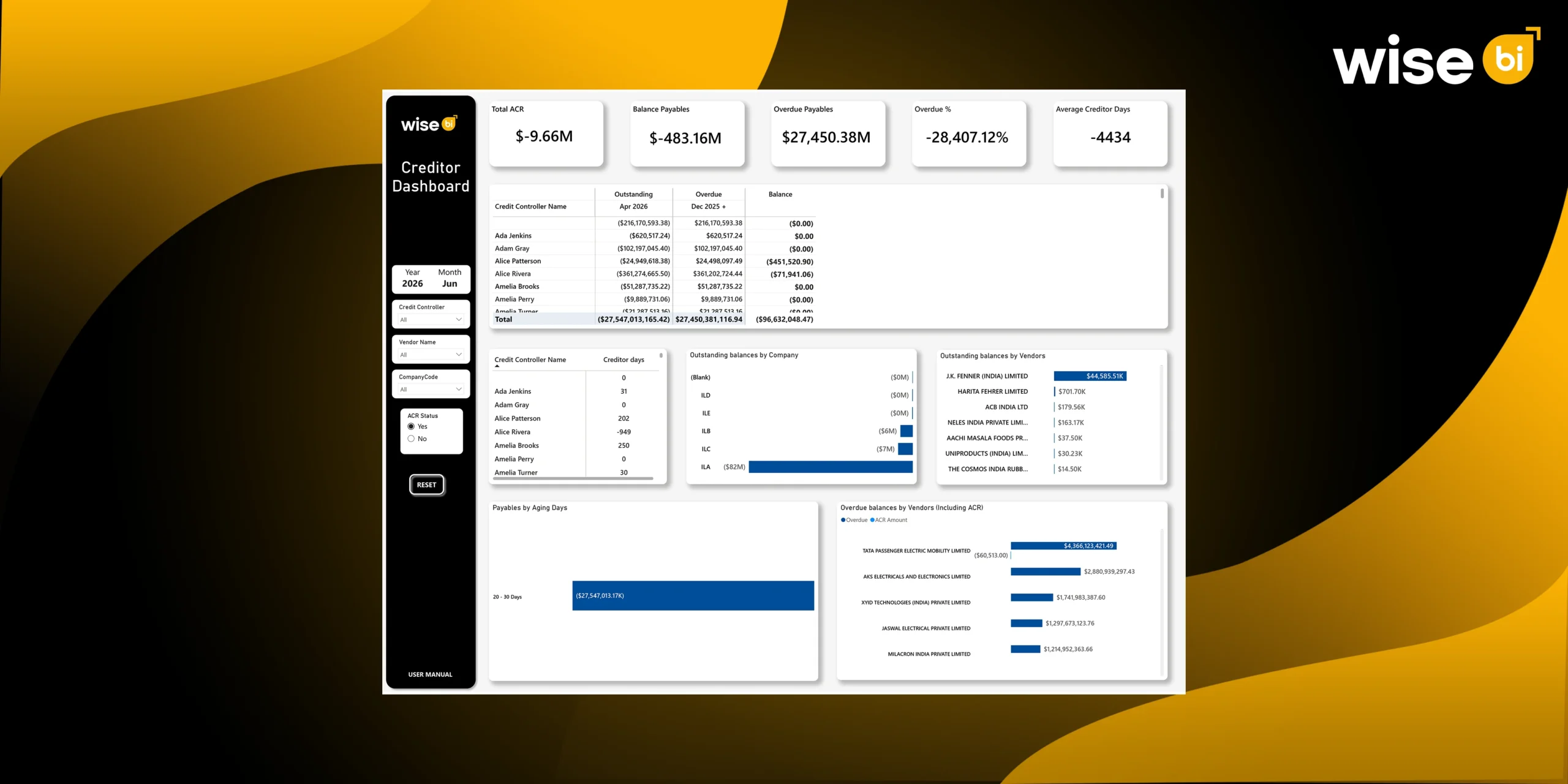
That is where the CargoWise Creditor Dashboard comes in handy. It transforms payables data into clear, visual insights, allowing finance teams and logistics leaders to manage vendor balances, overdue payables, ACR exposure, aging, and creditor days from a single view.
Accounts payable is closely linked to supplier relationships, working capital, and cash flow planning. The purchase-to-pay process has a direct impact on how businesses manage their obligations and maintain financial control. A creditor dashboard helps CargoWise users incorporate control into their daily decisions.
What is a CargoWise Creditor Dashboard?
A CargoWise Creditor Dashboard is a business intelligence (BI) dashboard that transforms CargoWise account payables and creditor data into clear, actionable financial insights. Instead of reviewing multiple reports or manually comparing vendor balances, finance teams can monitor payable exposure from a single centralized view.
The BI dashboard helps answer critical finance and payables management questions, such as:
- How much is currently payable?
- Which vendor balances are overdue?
- Which company has the highest payable exposure?
- Which credit controller is managing the largest outstanding balance?
- How long are payables remaining open?
- Which overdue vendor balances require immediate attention?
By providing real-time visibility into creditor performance and outstanding liabilities, the BI dashboard goes beyond traditional reporting. It becomes a proactive payables management tool that helps logistics and supply chain companies improve cash flow control, strengthen vendor relationships, and make faster financial decisions.
If your finance team still relies on manual reports, spreadsheets, and disconnected data sources, you may already be experiencing some of the challenges highlighted in our blog, Five Signs Your Logistics and Supply Chain Business Needs a BI Dashboard.
Standard CargoWise Payables Report Limitations
CargoWise reports offer useful payables data, but standard reports may not always provide finance teams with a quick, visual, and connected view.
Reports can be static. Vendor and company-level data may sit in different places. Aging and overdue analysis may require manual filtering. Credit controller performance may take time to compare. Overdue balances with ACR may need additional reconciliation.
This creates a common issue: teams spend more time preparing reports than acting on insights.
CargoWise AP dashboards are designed to display key KPIs, alerts, trends, and summary data in a graphical format, allowing teams to more easily monitor AP performance. For CargoWise users, this means that payables data is easier to understand, compare, and act upon.
Why does Payables Visibility Matter for CargoWise Users?
CargoWise accounts payable visibility is important because vendor payments affect more than just financial records. They affect vendor trust, service continuity, working capital planning, and operational stability.
In freight forwarding, late vendor payments can quickly cause problems. A haulier may halt service, an overseas agent may postpone assistance, or a supplier may request faster payment before accepting new jobs. That’s why finance teams require more than just payable totals. They require visibility into who is owed, how much is past due, how old the balance is, and who is responsible for follow-up.
Aging reports are widely used in accounts payable because they categorize unpaid bills by time period, allowing businesses to determine which obligations are current and which are past due. The Wise BI’s CargoWise creditor dashboard transforms the same concept into a more visual and actionable format.
For CargoWise users, this helps with:
- Preventing overdue vendor payments from being missed
- Prioritizing payments based on urgency and risk
- Improving vendor relationship management
- Supporting cash flow planning
- Giving leadership clearer visibility into liabilities
- Helping credit controllers manage workload and accountability
Payables visibility is not just accounting. It is vendor control, cash flow discipline, and business risk management.
What Payables Insights does the CargoWise Creditor Dashboard Provide?
The CargoWise Creditor Dashboard provides valuable payables insights that assist finance teams in monitoring liabilities, managing vendor balances, and improving cash flow visibility. These metrics facilitate faster decision-making and provide greater control over creditor performance.
Total ACR
Total ACR indicates accrual-related payable exposure. This is significant because accrued costs, while not always behaving like standard vendor balances, still have an impact on financial visibility.
When your team accurately tracks ACR, they can better understand pending cost obligations and avoid surprises during reconciliation or month-end review.
Balance Payables
Balance Payables displays the total payable balance. This provides finance teams with a quick overview of current vendor liabilities.
When this number rises, it could indicate increased vendor exposure, delayed payment cycles, or increased operational activity. Reviewing this KPI on a regular basis allows your team to understand how much cash is required to settle obligations.
Overdue Payables
Overdue Payables displays payables that have passed their due date. This is one of the most important indicators on a creditor dashboard because it emphasizes the urgency of payment.
If overdue payables continue to rise, your team may need to investigate payment approval delays, cash flow issues, vendor disputes, or process gaps.
Overdue Percentage
The overdue percentage indicates how much of the payable balance is past due. It provides a quick health check on payment discipline.
A payable value may appear large, but the overdue percentage indicates how much of the balance is at risk. This allows leadership to determine whether payables are being managed proactively or reactively.
Average Creditor Days
Average Creditor Days measures how long the business takes to pay creditors. This enables finance teams to assess payment cycle performance.
If creditor days are excessive, vendors may become dissatisfied. If they are too low, cash may leave the business prematurely. The goal is to strike a balance between maintaining healthy vendor relationships and protecting working capital.
Payables by Aging Days.
Payables by Aging Days displays balances grouped by age. This allows your team to prioritize old outstanding balances rather than treating all payables the same.
Accounts payable aging reports typically categorize unpaid invoices into time-based buckets, allowing teams to prioritize what needs to be addressed first. Aging is easier to see on a dashboard, especially during weekly finance meetings.
Outstanding Balances by Company
This view shows payables distribution across company codes. For freight forwarders managing multiple entities, this is useful because payable risk may not be evenly spread.
One company may hold the majority of the outstanding balance, whereas another may have fewer obligations. This allows leaders to understand where liability is concentrated.
Outstanding Balances by Vendors
Vendor-specific payable visibility enables finance teams to identify which vendors have the most outstanding exposure.
This is useful for vendor reviews, payment prioritization, and cash management. It also helps to keep critical suppliers from being overlooked.
Overdue Balances by Vendors Including ACR
This view displays overdue vendor balances and ACR exposure. This gives your team a more complete picture of the vendor’s payment risk.
AP dashboards frequently assist teams in tracking vendor payment statuses, overdue invoices, and areas that require attention to support timely follow-up and vendor relationship control.
Credit Controller-Wise Visibility
The credit controller’s visibility shows outstanding and overdue balances by the responsible person. This facilitates tracking workload, accountability, and follow-up performance.
Instead of asking who is in charge of which vendor balance, managers can quickly identify responsibility and action areas.
How does the BI Dashboard Help Finance Teams Make Better Decisions?
Wise BI’s CargoWise Creditor Dashboard helps finance teams move from manual payables review to proactive payment control.
Your team can prioritize overdue vendor payments, monitor payable risk by vendor, compare company-wise balances, review credit controller workload, improve payment planning, and support vendor relationship decisions.
For example, if one vendor’s overdue balance increases, finance can review aging days, ACR status, company code, and credit controller responsibility before the issue escalates. That makes decision-making faster and more informed.
Conclusion
The CargoWise Creditor Dashboard provides finance teams and logistics leaders with greater visibility into vendor payables, overdue balances, aging, ACR exposure, and creditor days. It consolidates scattered payables data into a single view, making it easier to prioritize payments, manage vendor risk, and improve financial control.
In today’s logistics environment, payables visibility means more than just knowing what you owe. It is important to understand what needs to be done, who is responsible, and how payment decisions affect cash flow and vendor relationships.
Do you want better visibility into CargoWise payables? Schedule a free demo with Wise BI today to see how a creditor dashboard can help your finance team track past-due payments, manage vendor balances, and improve payables control.