


A key customer calls to complain that shipment documents were submitted late. Your operations manager checks CargoWise and discovers that the required documents were uploaded two days after the agreed deadline.
The shipment was completed, but the customer’s standard operating procedure (SOP) wasn’t followed.
Now management has several questions. Was this an isolated mistake? Are other shipments facing similar delays? Is the problem limited to one employee, or is it happening across multiple branches?
For freight forwarding companies managing key accounts, following customer SOPs is essential for maintaining service quality and contractual commitments.
This is where SOP compliance monitoring in logistics becomes valuable. By converting customer-specific operating requirements into measurable KPIs, freight forwarders can identify compliance gaps, investigate recurring issues, and improve service consistency using CargoWise data.
Why is Customer SOP Compliance Important in Freight Forwarding?
Every major logistics customer may have different requirements for shipment handling, documentation, communication, carrier selection, and delivery coordination.
For example, one customer may require shipping instructions to be submitted within a specified timeframe, while another expects shipment milestone updates within two hours of receiving confirmation.
A customer may also require the freight forwarder to use approved carriers or follow specific procedures for customs documentation.
When employees manage multiple customers with different SOPs, maintaining consistency becomes challenging.
Common consequences of SOP non-compliance include:
- Delayed shipment documentation and customs processing.
- Missed customer notification deadlines.
- Incorrect carrier selection or service arrangements.
- Increased customer escalations and operational rework.
- Poor performance during customer service reviews.
The challenge is not simply documenting SOP requirements. It is knowing whether employees follow them consistently across shipments, teams, and branches.
Which Customer SOP Rules can Freight Forwarders Measure?
Not every SOP requirement can be measured automatically. However, requirements linked to recorded activities, timestamps, and operational events can often be converted into compliance checks.
Document Submission Deadlines
Customers may require shipping instructions, bills of lading, commercial invoices, or customs documents to be submitted before specific deadlines.
A compliance dashboard can compare the required deadline with the actual document submission or approval timestamp.
For example, if a customer requires shipping instructions 24 hours before a carrier’s documentation cutoff, the reporting model can flag late submissions when both timestamps are available.
Shipment Milestone Updates
Customer SOPs may specify when shipment milestones must be recorded or communicated.
These could include cargo collection, departure, arrival, customs release, or final delivery.
By comparing actual event timestamps with the agreed reporting window, managers can identify late milestone updates.
Approved Carrier Requirements
Some key accounts maintain approved carrier lists based on commercial agreements, service requirements, or compliance standards.
A measurable SOP check can compare the carrier recorded against the customer’s approved list.
Any exception can be flagged for investigation, including cases where an alternative carrier received prior authorization.
Customer Notification Requirements
Customers may require notifications when shipments are delayed, customs clearance is held, or delivery schedules change.
Where notification events are recorded, a reporting model can compare the incident timestamp with the customer communication timestamp.
This helps managers assess whether required updates were provided within the agreed timeframe.
How can CargoWise Data Support SOP Compliance Monitoring?
CargoWise contains shipment, customer, operational milestone, document, and related workflow information that can support compliance analysis.
However, SOP requirements must first be translated into measurable business rules.
For example, a customer may require delivery confirmation within four hours of completion.
To monitor this requirement, the reporting model needs the actual delivery timestamp, the confirmation timestamp, and the agreed four-hour limit.
The dashboard can then classify the shipment as compliant, non-compliant, or requiring further review.
The same approach can apply to document deadlines, carrier selection, and milestone updates.
Some requirements may need additional data from document systems, customer communication platforms, or external transport providers.
Accurate compliance monitoring depends on the completeness of these records and the correct interpretation of each customer’s SOP.
How do You Calculate SOP Compliance by Job and Customer?
A compliance score helps managers move beyond individual exceptions and understand overall service performance.
For example, consider a customer SOP with five measurable requirements: submitting documents on time, selecting an approved carrier, updating departure milestones, sending delay notifications within the agreed deadline, and completing delivery confirmation on time.
If the operations team meets four of these five requirements but sends the delay notification late, the shipment achieves an SOP compliance score of 80%. This is calculated by dividing the number of requirements met by the total applicable requirements and multiplying by 100.
Businesses can use the same approach to measure compliance across multiple shipments and evaluate overall performance by customer, branch, department, or team. Critical requirements, such as customs documentation or mandatory notifications, may also be assigned greater importance through weighted scoring.
Importantly, missing data should be distinguished from confirmed SOP violations to avoid inaccurate compliance results.
What can SOP Compliance Dashboards Reveal About Your Operations?
A compliance score tells management how frequently requirements are met. Investigating the underlying exceptions explains where improvements may be needed.
Identify Employee Training Gaps
If one team repeatedly misses customer notification deadlines while other teams meet them, management can investigate whether employees understand the customer’s SOP.
Targeted training, clearer work instructions, or improved handovers may help address the problem.
Identify Unrealistic SOP Requirements
Not every compliance failure results from employee performance.
A customer may require documentation within a timeframe that is difficult to achieve because of carrier schedules, external dependencies, or delayed information from the consignee.
If the same requirement is repeatedly missed across several teams, management should review whether the SOP is operationally achievable.
Compare Branch and Team Performance
For freight forwarders operating multiple branches, compliance dashboards can reveal differences in service execution.
For example, one branch may consistently meet milestone update requirements while another experiences recurring delays.
Management can investigate workload, training, system usage, or process differences before deciding on corrective action.
How can SOP Compliance Data Strengthen Customer Relationships?
Key-account customers expect freight forwarders to demonstrate that agreed service procedures are being followed.
During quarterly business reviews, account managers can present compliance trends alongside shipment volumes, delivery performance, and service KPIs.
Instead of responding only to customer complaints, they can show which SOP requirements were consistently achieved and where improvements were made.
For example, an account review could demonstrate that document submission compliance improved from 82% to 95% following revised procedures.
These figures are illustrative, but they show how measurable compliance reporting can support more productive customer discussions.
Documented improvements can also provide useful evidence during contract renewals, service evaluations, and discussions about changing operational requirements.
How does WiseBI Help CargoWise Users Monitor SOP Compliance?
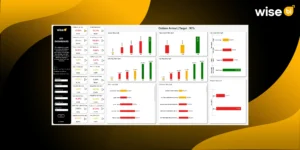
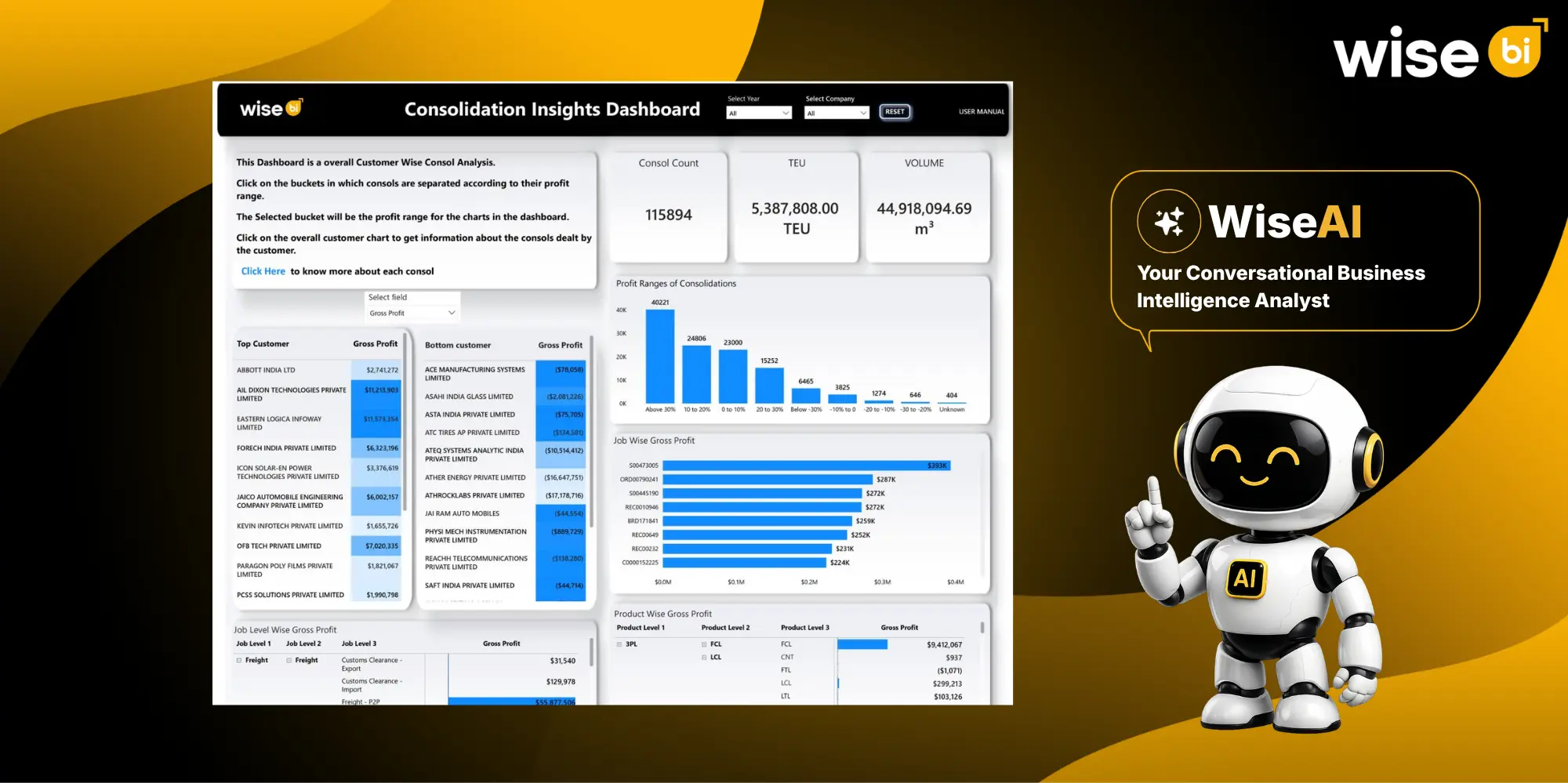
KPI and Performance Dashboards
WiseBI’s KPI and performance reporting dashboard can help businesses review measurable service indicators and compare results across relevant business dimensions.
Through custom reporting configurations, customer SOP requirements can be translated into compliance metrics for shipments, customers, teams, and branches.
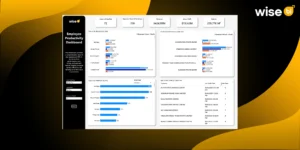
Employee Productivity Dashboards
Our Employee productivity dashboards can help management examine workload and operational performance.
When combined with appropriately configured SOP compliance data, these insights may help identify recurring process issues or areas requiring additional training.
Compliance results should be interpreted alongside workload, customer complexity, and external dependencies rather than used as a standalone measure of employee performance.
Control Tower Monitoring and Alerts
Our custom control tower reporting solution can help teams monitor upcoming SOP deadlines and identify overdue activities.
Where the necessary timestamps, workflow data, and alerting integrations are available, managers can receive notifications about exceptions before they escalate.
For example, a configured alert could highlight a shipment approaching a document submission deadline without the required completion event.
These capabilities depend on the specific data integration, reporting rules, and alert configuration.
We can help businesses evaluate these requirements and develop custom CargoWise BI reporting solutions aligned with their customer service commitments.
Conclusion
Customer SOPs establish how freight forwarders are expected to manage shipments, documents, milestones, and communication.
But written procedures alone don’t guarantee consistent execution.
By converting measurable SOP requirements into compliance checks, freight forwarders can identify exceptions, compare performance across teams, and investigate recurring process gaps.
For CargoWise users, WiseBI’s KPI dashboards, employee productivity analytics, and custom BI development services can support a more structured approach to monitoring customer SOP compliance.
Want better visibility into how your teams follow customer SOPs?
Book a free demo with WiseBI to explore how CargoWise BI dashboards and custom compliance reporting can help your business monitor service performance and strengthen key-account relationships.