

A shipment may reach its destination on time, the customer may be satisfied, and the job may appear complete. But is it actually profitable?
An overlooked handling charge, an unexpected supplier cost, or a delayed customer payment can quietly eat into your margins. When these small gaps go unnoticed across hundreds of shipments, the financial impact can be significant.
The real challenge isn’t just tracking what has happened; it’s spotting what could go wrong before it affects your bottom line. With AI-powered Business Intelligence (BI), freight forwarders can connect operational and financial data, uncover unusual patterns, identify potential revenue leakage, and make informed decisions before small issues turn into bigger losses.
What Causes Revenue Leakage in Freight Forwarding?
Revenue leakage occurs when a freight forwarding company fails to capture, invoice, or collect revenue it is entitled to receive. Common causes include missed accessorial charges, incorrect billing, incomplete invoices, and services performed without corresponding customer charges.
Consider a shipment requiring additional storage because the customer delays collection. If the final invoice doesn’t include the storage charge, the company loses revenue it could have collected.
Similar issues can arise with documentation fees, handling charges, and transport adjustments.
Revenue leakage differs from declining profitability. A job may be invoiced correctly but generate less profit because supplier costs increased or the selling rate was too low. Both affect financial performance, but identifying the cause is essential before taking corrective action.
Why Traditional Reporting May Miss Early Warning Signs?
Freight forwarders generate significant operational and financial information through CargoWise, including shipment records, billing transactions, supplier costs, and customer balances.
However, departments often review this information separately. Operations focuses on shipments, finance monitors billing and receivables, and sales tracks customer activity.
A customer may maintain consistent shipment volumes while generating lower gross profit each month. Without connecting operational and financial measurements, management may overlook the decline until the next financial review.
Business intelligence brings these measurements into structured reporting views. AI-powered analysis makes it easier to compare performance, investigate exceptions, and recognize patterns requiring attention.
How does AI-Powered BI Help Detect Revenue Leakage?
Identifying Unbilled Charges and Billing Gaps
When the necessary records are available, BI reporting can help finance teams compare operational services with invoiced charges.
For example, a completed shipment showing additional handling activity without a corresponding billing entry may require investigation.
Finance teams can review the customer agreement, job records, and invoice details to determine whether a charge was missed. This supports more accurate billing without assuming every discrepancy represents lost revenue.
Monitoring Job Profitability and Cost Variances
A shipment may generate expected revenue but deliver lower gross profit because actual supplier costs exceed estimates.
AI-powered BI helps freight forwarders compare job revenue, costs, and margins across customers, services, and reporting periods.
When profitability declines, managers can investigate whether the cause involves inaccurate quotations, additional supplier charges, or operational changes.
Identifying these variances earlier supports pricing reviews and cost management.
Recognizing Customer Revenue Declines
Customer activity provides another important warning signal.
A customer may gradually reduce shipment frequency, generate lower revenue, or contribute less gross profit despite maintaining similar shipment volumes.
Customer performance dashboards help sales teams recognize these changes, while AI-assisted analysis supports further investigation into customer activity and profitability.
These findings can help account managers prioritize conversations before commercial relationships weaken.
How do AI-Powered BI Alerts Help Identify Business Risks?
Detecting a financial problem during a monthly review may be too late to limit its impact. Configurable BI alerts can help management monitor selected performance conditions between reporting periods.
For example, a freight forwarder may define a gross profit margin threshold for particular services. When reported margins fall below that level, an alert can prompt the responsible manager to investigate the affected jobs.
Receivables monitoring is equally important. Freight forwarders often pay carriers and service providers before collecting customer payments. Increasing overdue balances can therefore create working capital pressure.
Financial dashboards help finance teams review outstanding balances and aging trends. Where supported, configurable alerts can highlight accounts meeting defined risk conditions.
Changes in shipment activity can also indicate potential business risks. A reduction in customer volumes may reflect seasonal demand, changing requirements, or a weakening commercial relationship.
Similarly, monitoring branch revenue and profitability can reveal performance differences hidden within company-wide results.
These alerts provide early signals rather than definitive explanations, allowing management to investigate before deciding on the appropriate response.
Turning Financial Alerts into Better Business Decisions
An alert becomes valuable when the business understands what has changed and why.
Suppose a customer’s gross profit margin declines. Management shouldn’t automatically increase prices without reviewing supplier charges, shipment types, and commercial agreements.
An overdue receivable may also require investigation because the customer could be disputing an invoice or awaiting supporting documents.
AI-powered analysis helps teams explore related information and compare performance across periods.
The objective isn’t to replace financial judgment with automated recommendations. It’s to make relevant information easier to access so finance, sales, and operations teams can respond more effectively.
How does WiseBI Help CargoWise Users Monitor Financial Risks?
WiseBI provides ready-to-use CargoWise business intelligence dashboards covering shipment activity, customer performance, job profitability, and financial results.
These dashboards help freight forwarding leaders understand performance across customers, branches, departments, and reporting periods.
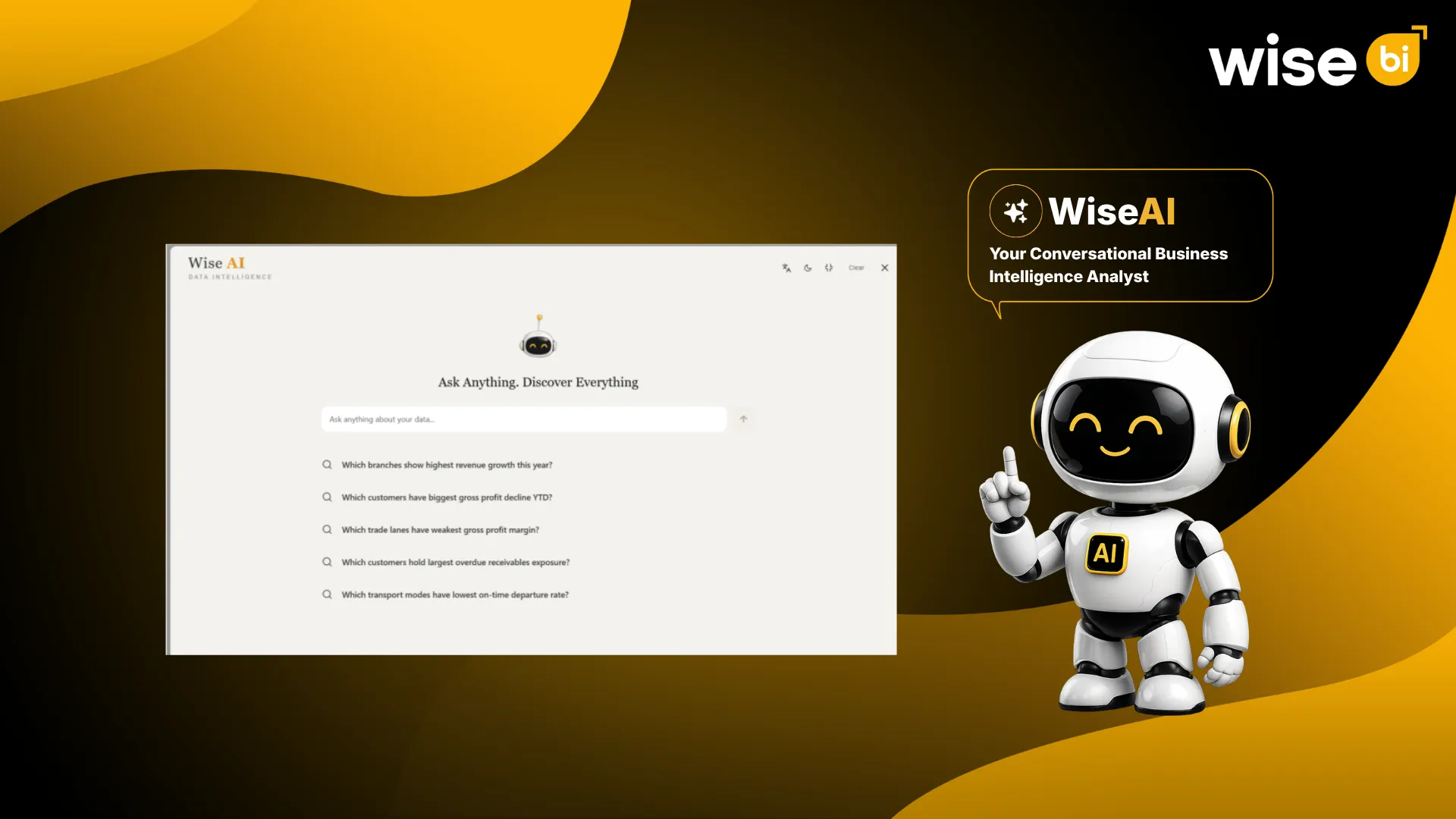
WiseAI extends these capabilities through natural language querying, simplifying logistics data analysis.
For example, a CFO could ask, “Which customers recorded the largest gross profit decline this quarter?”
WiseAI can present relevant results through charts, tables, and written insights. Follow-up questions allow users to investigate particular customers, branches, or periods without preparing separate reports.
AI-generated dashboards, performance comparisons, and recommendations can further support financial investigations. Depending on the deployment and available data, configurable alerts can help teams monitor selected business conditions.
It helps freight forwarders identify changes, investigate potential risks, and improve financial visibility.
Why do Data Accuracy and Governance Matter?
Effective risk monitoring depends on accurate information. Incomplete billing records, incorrect supplier costs, or inconsistent reporting definitions can produce misleading results.
Freight forwarders should maintain reliable transaction records, consistent KPIs, and clear responsibilities for investigating exceptions.
Security is equally important because customer revenue, profitability, and commercial agreements contain sensitive information.
WiseAI is designed around read-only analytical access, role-based controls, verifiable answers, and audit-related safeguards. These measures support controlled analysis without modifying CargoWise operational records, subject to deployment configuration.
Building an Early-Warning Approach to Revenue Protection
Freight forwarders can begin by identifying the financial and operational risks most relevant to their business.
These may include unbilled charges, declining job margins, overdue receivables, reduced customer activity, or unexpected branch performance changes.
Management can establish appropriate KPIs, define monitoring thresholds, and assign responsibility for investigating exceptions.
BI dashboards provide consistent performance visibility, while AI-powered analysis helps teams understand unusual changes.
Making these practices part of regular management reviews can help businesses recognize potential problems earlier and respond before financial exposure increases.
Conclusion
Protect revenue before small gaps become bigger losses.
Revenue leakage often develops through overlooked charges, billing discrepancies, and unresolved financial exceptions. Declining margins, overdue receivables, and changing customer activity can create additional risks when they go unnoticed.
AI-powered BI helps freight forwarders identify these warning signs, investigate their causes, and make informed decisions before problems become more difficult to manage.
Could your CargoWise data be revealing financial risks your team hasn’t noticed yet?
Book a free demo with WiseBI to see how connected analytics can help your business identify revenue gaps, monitor profitability, and strengthen financial oversight.