



December is getting closer, and so is the year-end financial review. Your team may already be checking shipment revenue, outstanding invoices, supplier charges, and branch results.
But here’s the question: Do those numbers tell you how much your freight forwarding business actually earned?
A completed shipment might be missing a supplier charge. Your busiest customer might deliver disappointing margins. And unpaid invoices could be tying up cash even when revenue looks strong.
CargoWise contains valuable operational and accounting information. The challenge is bringing those numbers together to understand what needs attention before 2027.
📊 Why does Financial Visibility Matter Now?
Cost pressure remains a real concern. A recent survey found that 25% of surveyed logistics service providers named freight cost management their biggest transportation challenge, while 21% identified operating cost management.
Here’s why that matters. Your shipment volumes may be growing, but if carrier rates, handling charges, and other expenses rise faster, revenue growth won’t necessarily translate into higher profit.
Before closing out the year, management needs to look beyond revenue and understand gross profit, outstanding receivables, and overall financial performance.
A financial operations dashboard solution can bring revenue, expenses, profitability, receivables, and payables into a connected financial view. This helps freight forwarders identify financial gaps, understand their business performance, and make more informed budgeting decisions for 2027.
💰 Are Your Shipment Revenue and Costs Complete?
Picture an ocean freight shipment completed in November. The customer has been invoiced, and the job appears profitable. Then, a terminal handling invoice arrives in December.
Suddenly, the margin looks different.
Other gaps can arise from completed jobs awaiting billing, supplier invoices that haven’t been posted, or costs assigned to the wrong shipment.
Finance and operations teams should review these items together and record any required accruals or adjustments according to their accounting policies.
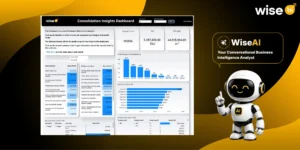
A shipment analysis dashboard can help teams examine shipment-level revenue, costs, gross profit, and loss-making jobs, making it easier to identify financial discrepancies that require investigation.
📈 Which Customers and Branches Actually Made Money?
Here’s a useful question for your year-end meeting: Was your highest-revenue customer also your most profitable?
Not necessarily. A large customer might book hundreds of shipments at thin margins, while a smaller account generates stronger gross profit per job.
Branch results can be just as revealing. One location might increase ocean freight revenue but experience declining margins because supplier costs rose.
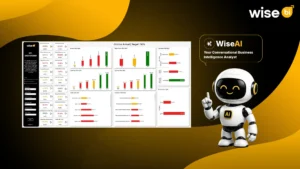
A branch insights dashboard helps management compare revenue, gross profit, and margin percentages across branches, transport modes, and reporting periods.
These comparisons reveal which locations contributed most to business performance and where management should investigate changes before setting 2027 budgets.
🧾 What are Outstanding Receivables Telling You?
Revenue recorded on an invoice isn’t the same as money in the bank.
If customers are paying late, your business may face cash-flow pressure despite healthy reported profits. That’s why accounts receivable aging deserves attention during the year-end review.
Which customers have invoices overdue by 30, 60, or 90 days? Are outstanding balances concentrated in a few accounts?
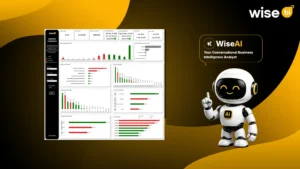
An accounts receivable dashboard helps finance teams review overdue balances, customer payment patterns, debtor days, and credit exposure.
These insights support collection priorities and working capital planning for the months ahead.
🤖 Why Can’t CargoWise Reports Alone Show the Full Financial Picture?
CargoWise provides valuable financial and operational reports, including shipment revenue, job costs, invoices, and accounting information.
But here’s the question: Are those reports helping you understand your overall business performance, or are you spending hours connecting the numbers?
While standard reports provide important information, understanding why margins declined or how performance changed across branches may require additional analysis.
That’s where AI-powered BI dashboards can make a difference.
By connecting CargoWise data with Power BI, freight forwarders can:
- See the Bigger Picture: Compare revenue, costs, and gross profit across customers, branches, and transport modes.
- Understand Profitability: Identify declining margins and investigate financial changes.
- Ask Questions Naturally: Use everyday language to receive relevant charts, summaries, and insights.
- Spot Changes Earlier: Monitor financial trends and receive alerts about unusual performance changes.
- Access Insights Securely: Analyze financial information through role-based permissions and read-only connections.
- Prepare for 2027: Use historical financial insights to support budgeting and business planning.
Is AI-Powered Financial Analysis Safe?
Data security matters, especially when dealing with sensitive financial and customer information.
A properly configured AI-powered BI solution can provide secure, read-only access to CargoWise data, allowing authorized users to analyze business performance without modifying transactions, invoices, or accounting records.
Role-based permissions help restrict access to authorized information. Encryption, secure authentication, and appropriate data governance provide additional protection.
AI-generated findings should also be validated before important financial decisions are made.
The goal isn’t to replace CargoWise reporting. It’s to make financial information more connected, accessible, and actionable while protecting underlying records.
🔍 What Should You Check Before Closing 2026?
Before finalizing your financial reports, focus on five essential areas:
- Shipment Revenue: Identify completed shipments awaiting customer billing.
- Freight Costs: Check for missing supplier charges and expenses affecting job profitability.
- Customer Profitability: Compare revenue, costs, and gross profit across customer accounts.
- Outstanding Receivables: Review overdue invoices and balances requiring follow-up.
- Branch Performance: Examine financial results across locations to identify margin changes.
AI-powered dashboards can make these reviews easier by highlighting unusual results and helping teams investigate the underlying records.
The findings can also support more realistic budgets and business targets for 2027.
🚀 Make Your 2026 Numbers Work for 2027
Closing out 2026 isn’t just about preparing financial statements. It’s about understanding what your freight forwarding business earned, where costs increased, and which areas need improvement.
With AI-powered dashboards, CargoWise users can turn financial data into clearer insights for better decision-making.
Ready to see the complete financial picture before entering 2027?
The right logistics BI solution can help you analyze profitability, monitor financial performance, and make informed business decisions with your CargoWise data.
Make your 2026 financial review the foundation for smarter decisions in 2027.