

Your logistics company has delivered the cargo, issued customer invoices, and paid the carriers. But the payments you’re expecting from customers haven’t arrived.
Meanwhile, your finance team is busy reviewing overdue invoices, updating Excel reports, checking customer balances, and following up on payments. The workload keeps growing, while outstanding receivables continue putting pressure on cash flow.
Does improving collections mean hiring more credit controllers?
Not necessarily. For freight forwarders and logistics providers using CargoWise, reducing outstanding receivables starts with better accounts receivable management, clear collection priorities, and less manual reporting.
Why do Outstanding Receivables Put Pressure on Logistics Cash Flow?
Freight forwarders often pay shipping lines, airlines, trucking companies, and warehouses before collecting payments from customers.
When customers delay payments, businesses must continue covering operating expenses while waiting for money they’ve already invoiced.
The challenge increases when finance teams manage hundreds of invoices across customers, branches, and different payment terms.
CargoWise records financial transactions, but reviewing separate reports and maintaining collection spreadsheets can take time.
Finance managers need to understand which customers owe money, how long invoices have been outstanding, and where credit exposure is increasing.
Without that visibility, collection activities become reactive, making working capital management more difficult.
The Real Problems Slowing Down Customer Collections
Too Much Time Spent Preparing Receivables Reports
Credit controllers often export CargoWise data, update accounts receivable aging reports, verify balances, and prepare collection lists.
When these tasks are repeated every week, employees spend more time preparing information than contacting customers.
Limited Visibility Into Overdue Invoices
Not every outstanding invoice is overdue.
Some customers are still within their agreed payment terms, while others have balances requiring immediate attention.
Without organized aging information, finance teams may struggle to identify which accounts need priority follow-up.
Increasing Customer Credit Risk
Customers may continue booking shipments while previous invoices remain unpaid.
When outstanding balances exceed approved credit limits, logistics providers face additional financial exposure.
Finance and sales teams need consistent information to review these accounts before extending further credit.
Unresolved Invoice Disputes
Incorrect charges, missing documents, or payment allocation issues can delay customer payments.
Repeated reminders won’t resolve these problems.
Finance teams need access to transaction details to investigate differences and coordinate resolutions.
Practical Ways to Reduce Outstanding Receivables
Prioritize Collections Using Invoice Aging
Separate current receivables from overdue balances and review accounts based on aging, outstanding amounts, and agreed payment terms.
This helps credit controllers focus on customers requiring attention rather than treating every unpaid invoice equally.
Review Customer Credit Limits Regularly
Compare customer balances against approved credit limits.
When exposure increases, finance managers can coordinate with sales and operations to review further credit decisions while considering existing customer agreements.
Resolve Invoice Disputes Earlier
Establish clear responsibilities for investigating incorrect charges, missing documents, and payment differences.
Addressing these issues promptly can prevent avoidable collection delays.
Assign Clear Collection Responsibilities
Every overdue account should have an assigned credit controller and an appropriate follow-up priority.
Clear ownership helps reduce duplicated effort and overlooked customer balances.
Monitor Collection Performance
Review overdue percentages, average debtor days, and outstanding balances over time.
These measures help finance managers identify changes in collection performance and determine where further action is needed.
How does WiseBI’s CargoWise Debtor Dashboard Support Better Collections?
Managing outstanding receivables becomes easier when finance teams can access customer balances, overdue amounts, credit exposure, and transaction details without repeatedly preparing spreadsheets.
WiseBI’s CargoWise Debtor Dashboard organizes this information into a structured reporting environment.
Track Key Receivables and Collection Metrics
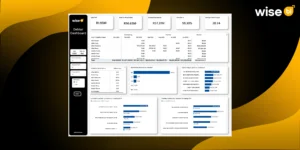
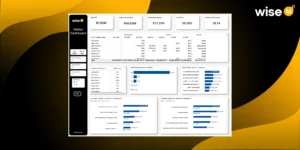
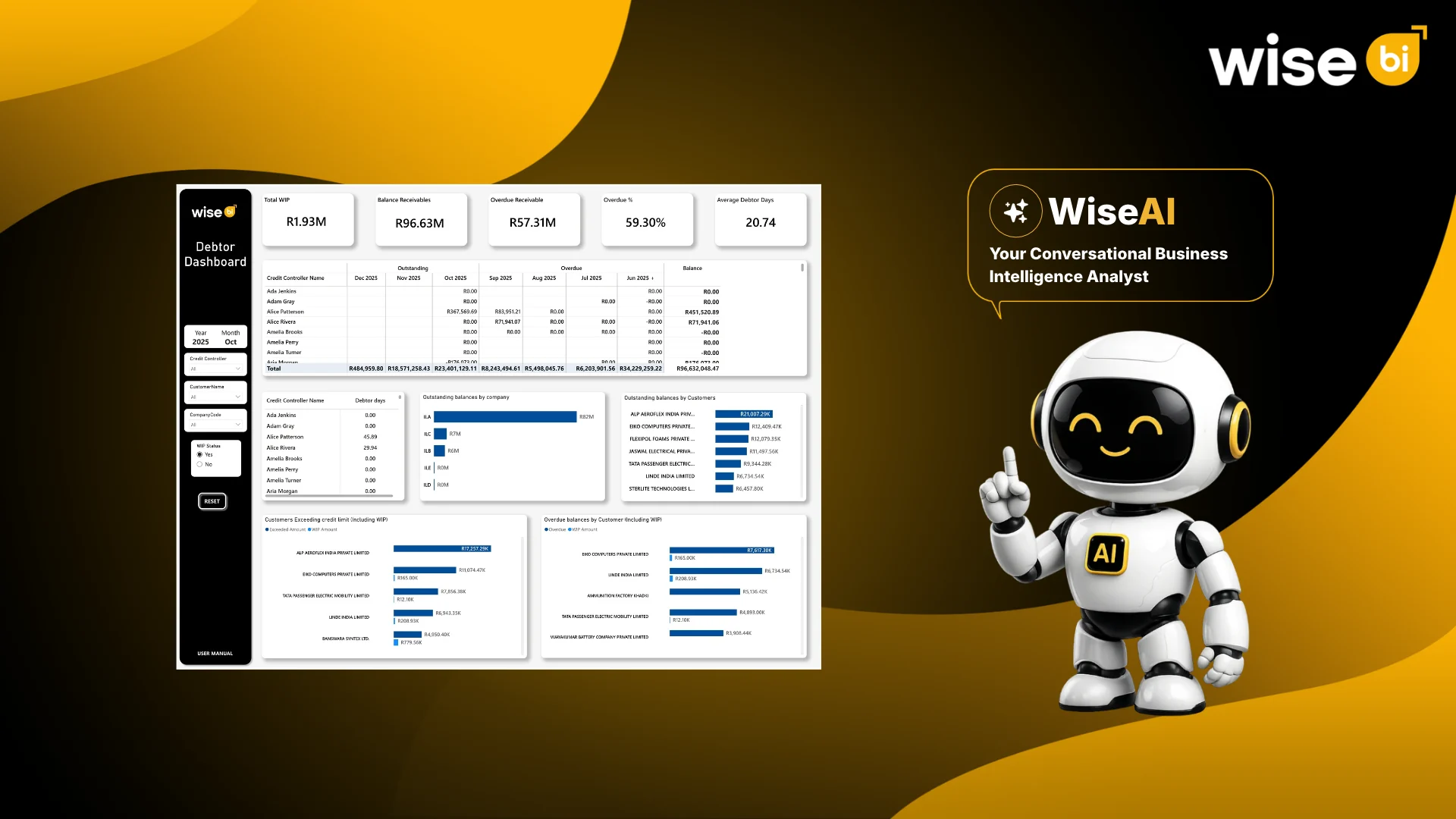
The dashboard provides five important financial indicators:
- Balance Receivables: Total outstanding customer receivables.
- Overdue Receivables: Customer balances that have passed their payment due dates.
- Overdue Percentage: The proportion of receivables classified as overdue.
- Average Debtor Days: A measure used to review debtor collection periods.
- Total WIP: Work-in-progress amounts included in the reporting view.
These metrics help finance managers assess receivables performance and identify potential working capital concerns.
Identify Customers With High Outstanding Balances
The dashboard displays outstanding balances by customer and company.
Finance teams can identify customers with significant unpaid amounts and review overdue balances, including relevant WIP information.
This helps credit controllers prioritize collection reviews based on customer exposure.
Monitor Customers Exceeding Credit Limits
The BI dashboard highlights customers exceeding approved credit limits, including exceeded amounts and WIP values.
This helps finance and commercial teams identify potential customer credit risk and investigate accounts requiring attention.
Review Credit Controller Performance
Finance managers can examine outstanding balances by credit controller and review individual debtor-day information.
This provides visibility into how receivables are distributed across collection responsibilities and supports more organized workload planning.
Investigate Invoice-Level Transactions
The transaction drill-through view provides detailed financial information, including:
- Customer name, credit controller, and company code
- Transaction number, type, and status
- Posting date and payment due date
- Invoice amount and paid amount
- Pending amount and overdue amount
- Aging days
These details help credit controllers investigate outstanding invoices and prepare more accurate customer follow-ups.
Review Work-in-Progress Details
The WIP drill-through view includes customer names, company codes, job numbers, reporting periods, and WIP amounts.
This helps finance teams review job-level work in progress alongside customer receivables information.
Filter Reports Without Rebuilding Spreadsheets
Users can filter the dashboard by year, month, credit controller, customer, company code, and WIP status.
The transaction view also includes a transaction-type filter.
These options help finance teams focus on specific accounts, reporting periods, and collection responsibilities without repeatedly exporting data into Excel.
Get Answers About Your Receivables Without Manual Reports
WiseAI, WiseBI’s AI-powered data intelligence assistant, helps CargoWise users analyze outstanding receivables through natural-language questions.
Finance teams can ask questions like “Which customers have the highest overdue balances?” or “How have receivables changed over the last three months?”
WiseAI provides answers through charts, tables, AI-generated dashboards, and written insights, with follow-up questions for deeper analysis.
With read-only access, role-based permissions, and a full audit trail, WiseAI helps finance teams investigate payment delays without modifying CargoWise records or preparing additional Excel reports.
Reduce Finance Workload with Better CargoWise Reporting
Hiring additional finance staff may increase collection capacity, but it doesn’t automatically solve inefficient reporting processes.
When credit controllers spend hours preparing spreadsheets, less time remains for customer follow-ups, payment investigations, and dispute resolution.
With WiseBI’s CargoWise Debtor Dashboard, finance teams can access overdue balances, customer credit exposure, and transaction details in one place, reducing manual reporting work.
This helps your existing finance team spend less time finding information and more time managing collections.
Conclusion
Outstanding accounts receivable affect cash flow, supplier commitments, and the financial stability of logistics operations.
Reducing overdue balances requires clear collection priorities, consistent credit control, accurate transaction information, and reliable performance reporting.
WiseBI’s CargoWise Debtor Dashboard and Data Intelligence Assistant help freight forwarders reduce repetitive reporting work, monitor outstanding receivables, and investigate payment delays, giving existing finance teams more time to focus on collections.
Want to improve your collection process without increasing your finance team’s workload?
Schedule a Free Demo with WiseBI to explore how our CargoWise BI solutions can support your logistics business.