


“Why did our ocean freight profit decline last month?”
It’s a simple business question. But finding the answer may involve reviewing shipment records, comparing financial reports, filtering customer data, and checking performance across branches.
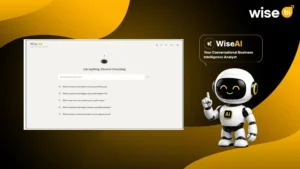
Now imagine asking that same question in plain English and receiving a breakdown of the results, supported by charts, tables, and relevant business insights.
That’s the idea behind natural language querying. For freight forwarders using CargoWise, AI-powered business intelligence makes it easier to explore operational and financial data without building a new report for every question.
With WiseAI, logistics teams can ask questions, investigate performance changes, compare results, and use AI-generated insights to support business decisions.
What is Natural Language Querying in Business Intelligence?
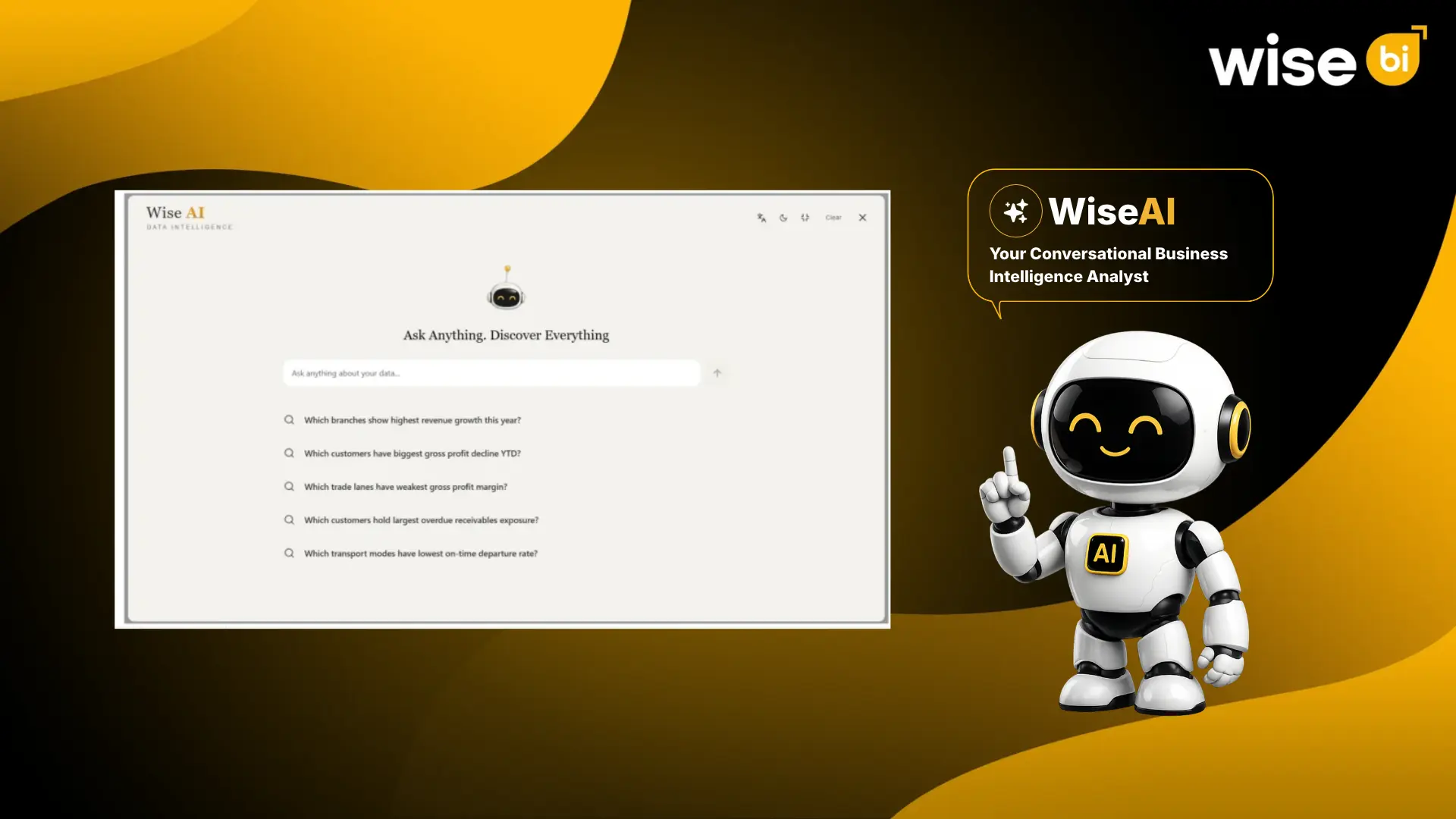
Natural language querying (NLQ) allows users to interact with business data through everyday questions instead of writing SQL commands, creating complex formulas, or manually configuring reports.
For example, a freight forwarding manager could ask, “Which branches generated the highest gross profit last quarter?”
An AI-powered BI system interprets the question, retrieves relevant information from connected data, and presents the results through charts, tables, dashboards, or written explanations.
This makes business intelligence more accessible to logistics professionals who understand their operations but may not have technical reporting expertise.
Why does Traditional Logistics Data Analysis become Time-Consuming?
Freight forwarders manage large amounts of data across shipments, customers, carriers, branches, warehouses, and financial transactions. Although CargoWise supports these operations, analyzing information across different business areas can still require additional reporting work.
Repeated Manual Reporting
Finance and operations teams may export CargoWise data into Excel, apply filters, calculate KPIs, and prepare summaries.
When management requests another comparison, employees often need to repeat the process. This takes time away from reviewing business performance and addressing operational issues.
Dependence on Technical Teams
Not every logistics employee understands SQL, database structures, or advanced BI tools.
When a required report isn’t available, employees may need support from BI specialists. This can create delays, especially when management needs information for an immediate business discussion.
Difficulty Investigating Performance Changes
A dashboard might show declining revenue, but management still needs to understand which customers, branches, or services contributed to the change.
Finding those details through separate reports can take time. Natural language querying makes it easier to investigate these questions using connected business data.
How does Natural Language Querying Simplify Logistics Data Analysis?
Natural language querying allows logistics professionals to begin their analysis with a business question rather than a technical reporting process.
Ask Business Questions Without Technical Knowledge
Operations managers don’t need to write SQL queries to understand shipment performance. They can ask questions such as “Which trade lanes handled the highest shipment volumes?” or “How has air freight tonnage changed this quarter?”
The system interprets the question and returns relevant information from the available data. This allows employees to focus on understanding the results rather than preparing the underlying query.
Investigate Results Through Follow-Up Questions
Business questions rarely end with one answer.
After identifying a decline in shipment volume, a manager may want to examine the affected branches or compare results with previous months.
Our conversational BI allows users to continue asking related questions within the same discussion. This makes it easier to investigate performance changes without creating separate reports.
Compare Business Performance
Natural language querying helps managers compare results across reporting periods, customers, departments, and transport modes.
These comparisons provide context for understanding changes in operational and financial performance. Managers can identify which business areas need attention and use the findings to guide further investigation.
WiseAI: Natural Language Business Intelligence for CargoWise Users
WiseAI is WiseBI’s AI-powered data intelligence assistant, developed for businesses using CargoWise. It combines natural language querying, visual analytics, and AI-powered capabilities to help logistics professionals explore business data more easily.
Natural Language Questions and Conversational Analysis
Users can ask questions about shipment volumes, customer performance, revenue, profitability, and other supported business information using everyday language.
They can also ask follow-up questions to investigate specific customers, branches, or reporting periods. This allows users to continue their analysis through a conversation rather than requiring a new report for every question.
Interactive Charts, Tables, and AI-Generated Dashboards
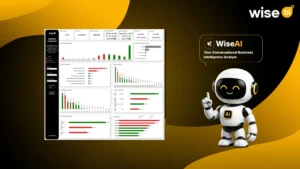
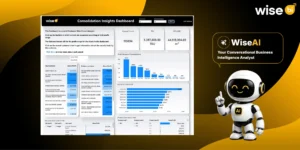
Analytical results can be presented through charts, tables, and AI-generated dashboards.
These visualizations help users compare figures, recognize trends, and understand performance across different business areas. Generated dashboards can bring related metrics together without requiring employees to manually design every report.
Written Insights and Performance Comparisons
Alongside visual results, the platform provides written explanations that help managers understand changes in business performance.
Users can compare results across months, quarters, customers, departments, and branches. These comparisons help identify patterns that may not be immediately visible in individual reports.
AI-Generated Recommendations
WiseAI can provide recommendations based on patterns identified in business data.
For example, declining customer activity may lead to suggestions for reviewing account performance or investigating changes in shipment volumes.
These recommendations help managers evaluate possible actions and make informed decisions using their operational experience and business knowledge.
Forecasting and Predictive Insights
Forecasting capabilities use available historical information to help logistics managers explore potential shipment demand, revenue trends, and resource requirements.
These insights can support business planning, particularly when combined with confirmed bookings, current market conditions, and operational knowledge.
Configurable Alerts
Configurable alerts help users monitor selected business conditions without repeatedly checking reports.
Depending on the implementation, alerts can highlight important changes in performance indicators, helping management identify situations that may require attention.
Conversation History and Downloadable Reports
Conversation history allows users to revisit previous questions and continue analytical discussions.
Downloadable reporting capabilities also help employees share findings during management meetings and internal performance reviews.
Together, these features make it easier to retain useful insights and communicate information across departments.
Mobile-Friendly Access
A mobile-friendly experience supports access to available business information away from a desktop workstation.
This can help logistics managers review insights while working across offices or operational locations.
The availability of certain features, including forecasting, alerts, downloads, and mobile access, may depend on the WiseAI deployment.
How does Natural Language Querying Help Logistics Teams?
Natural language querying supports different departments by making relevant business information easier to explore.
Operations managers can review shipment volumes, branch activity, and changes in transport-mode performance. Finance teams can investigate overdue receivables, customer balances, and profitability trends.
Sales teams can examine customer revenue, shipment activity, and account performance to identify changes that may require follow-up.
Senior management can compare results across countries, branches, and departments to understand overall business performance.
Instead of preparing separate reports for every question, authorized employees can explore supported information through a conversational interface.
How does WiseAI Keep CargoWise Data Secure?
Making business information easier to access also requires appropriate data protection.
Our WiseAI security approach focuses on read-only access, role-based permissions, verifiable answers, and a full audit trail.
Read-Only Access
WiseAI provides analytical access without creating, modifying, or deleting CargoWise business records.
This allows employees to explore information while keeping operational transactions unchanged.
Role-Based Permissions
User access is governed by configured permissions and database policies.
These controls help businesses manage which information employees can view according to their responsibilities and authorized access.
Verifiable Answers
WiseAI provides supporting figures, tables, and visualizations that help users review AI-generated findings.
Managers can examine the available evidence and combine those insights with their experience when making business decisions.
Full Audit Trail
Logging and audit-related controls support visibility into analytical activity.
These safeguards help organizations maintain oversight of how information is accessed and analyzed, subject to their deployed security configuration.
How does Natural Language Querying Work Alongside Traditional BI Dashboards?
Natural language querying and traditional BI dashboards support different reporting requirements.
Dashboards provide consistent views of established KPIs, such as shipment volumes, profitability, customer activity, and outstanding receivables.
Natural language querying helps users investigate additional questions that may not be covered by existing reporting views.
WiseBI combines ready-to-use CargoWise dashboards and custom BI development with our conversational data intelligence assistant, helping logistics businesses to track regular performance metrics while asking specific questions in natural language.
Together, these capabilities provide structured reporting and flexible business analysis within a connected BI environment.
Conclusion
Logistics businesses need more than access to data. They need a practical way to understand what that information means for operational and financial performance.
Natural language querying simplifies this process by allowing employees to ask questions, explore trends, compare results, and review insights without repeatedly preparing reports.
With WiseAI, freight forwarders can use AI-generated dashboards, forecasting, recommendations, and conversational analysis to support more informed business decisions.
Want to explore your CargoWise data through natural language questions?
Book a free demo with WiseBI to see how WiseAI can simplify logistics data analysis and help your team turn business questions into useful insights.