


A shipment was completed two weeks ago, and you’ve already invoiced the customer. However, the carrier’s final invoice hasn’t arrived, leaving your finance team to confirm whether the expected costs have been recorded correctly.
Now imagine hundreds of forwarding jobs with similar pending charges at the end of the month. Finance teams must review outstanding costs, check supplier invoices, and correct discrepancies before finalizing the financial statements.
This is why managing freight accruals during month-end close can become time-consuming. The challenge isn’t simply closing the accounts; it’s making sure shipment revenue, expected costs, and actual expenses are recorded accurately.
Accrual dashboards can help finance teams identify missing costs, outdated accruals, and unusual balances before the closing process begins.
How do Accruals Work in Freight Forwarding?
A single freight forwarding job can involve several suppliers, including shipping lines, airlines, trucking companies, customs brokers, and handling agents. Each supplier may issue invoices at different stages of the shipment process.
However, customer billing and supplier invoicing don’t always happen within the same accounting period. A forwarder may recognize shipment revenue before receiving all the related supplier invoices.
For example, a shipment may generate $8,000 in revenue with expected supplier costs of $6,000. If those costs haven’t been invoiced, the finance team may need to record appropriate accruals under the company’s accounting policies.
Without the cost accrual, the shipment could temporarily appear to generate $8,000 in gross profit instead of the expected $2,000. When the supplier invoices arrive, the reported profitability would change significantly.
Accruals help ensure that relevant revenue and costs are recognized in the appropriate reporting period, even when invoices are still pending.
Why do Freight Accruals Delay Month-End Closing?
Freight accruals become difficult to manage when expected charges, supplier invoices, and job records don’t match. Finance teams must investigate these differences before relying on the reported figures.
Supplier Invoices Arrive Late
Carriers, transport providers, and overseas agents may submit invoices after the related shipment activity has been completed. Finance teams must identify which costs should be accrued even though the final invoices haven’t arrived.
Estimated Costs don’t Match Actual Charges
Operations teams may record expected freight charges during shipment processing. Final supplier invoices can differ because of surcharges, storage, handling, or additional services.
These differences require review to determine whether the original accruals should be adjusted.
Old Accruals Remain Unresolved
Some accrual balances remain open after the corresponding supplier invoices have been processed or the expected charges have changed. Without regular monitoring, these balances can accumulate and affect financial reporting accuracy.
Jobs Show Revenue Without Expected Costs
A shipment may have recognized revenue but no corresponding cost accrual. This could indicate missing supplier charges, incomplete job information, or a legitimate transaction requiring no additional cost.
Finance teams must investigate these exceptions before assuming the reported job profit is correct.
Which Accrual Measures Should Finance Teams Monitor?
A useful accrual dashboard should highlight transactions that require attention rather than simply display the total accrued amount.
The following measures can help finance teams prioritize their month-end reviews.
| Accrual Measure | What it Helps Identify |
| Accrued vs. Actual Cost by Creditor | Differences between estimated supplier costs and posted invoices |
| Stale Accruals | Accrual balances remaining unresolved beyond the expected period |
| Revenue Without Cost Accrual | Jobs with recognized revenue but potentially missing expected costs |
| Open Job Accruals | Outstanding revenue and cost accruals associated with active forwarding jobs |
| Accrual Variances | Significant differences requiring investigation |
| Accrual Aging | How long accrual balances have remained outstanding |
These measures become more useful when finance teams can filter results by creditor, branch, job, department, and reporting period.
A Practical Pre-Close Checklist Using Accrual Dashboards
Month-end closing becomes more manageable when finance teams begin reviewing accrual exceptions during the final week rather than waiting until the last working day.
The BI dashboard-driven checklist helps organize this process and establish clear priorities.
Five Working Days Before Close: Review Outstanding Accruals
Start by reviewing outstanding revenue and cost accruals across open and recently completed forwarding jobs. Identify unusually large balances, aging accruals, and creditors with significant outstanding amounts.
Prioritize exceptions based on financial materiality and the likelihood of reporting errors.
Four Working Days Before Close: Compare Accrued and Actual Costs
Compare supplier invoices received against previously recorded accruals. Investigate significant differences and determine whether estimates require adjustment.
Confirm that invoices and related accruals have been matched or cleared appropriately to avoid recognizing the same cost twice.
Three Working Days Before Close: Identify Missing Accruals
Review jobs that show recognized revenue without corresponding expected cost accruals. Also check jobs where services have been performed, but customer billing remains pending.
Work with operations teams to confirm whether supplier charges or revenue entries require attention. Update job information and process approved accrual adjustments where necessary.
Two Working Days Before Close: Investigate Aging Balances
Examine accruals that have remained unresolved longer than expected. Determine whether supplier invoices are pending, estimates require correction, or balances should be reversed according to accounting procedures.
Assign responsibility for unresolved items and document the required follow-up.
Final Working Day: Validate Financial Results
Review outstanding material exceptions and confirm that approved adjustments have been processed. Compare updated job profitability with relevant financial reporting totals.
Escalate significant unresolved differences before management reports are finalized.
How do Incorrect Accruals Affect Job Profit and the P&L?
Accrual accuracy directly affects the reliability of freight forwarding financial reports. When expected costs are missing, shipment gross profit may appear higher than it should.
When outdated or excessive accruals remain unresolved, profitability may appear lower than the underlying business activity supports. Missing or incorrectly recorded revenue accruals can also affect the reported results.
These differences can affect financial performance across customers, branches, departments, and transport modes. Management may make pricing or operational decisions based on figures that later require correction.
When reported margins change after the monthly P&L has been reviewed, management may question the reliability of the financial results. Accurate accruals help finance teams present figures that decision-makers can trust.
Accrual dashboards help finance teams identify these risks earlier, but they don’t replace accounting controls. Transactions must still be validated, and necessary adjustments must follow the company’s accounting policies.
How does WiseBI Support Freight Accrual Reviews?
WiseBI provides CargoWise-focused dashboards that help freight forwarding companies examine financial and operational performance.
Its reporting areas include creditor analysis, job profitability, and financial performance, which can support different stages of the accrual review process.
The Creditor Dashboard provides visibility into supplier-related financial information. Accrued-versus-actual cost comparisons may require specific data mappings and configured measures.
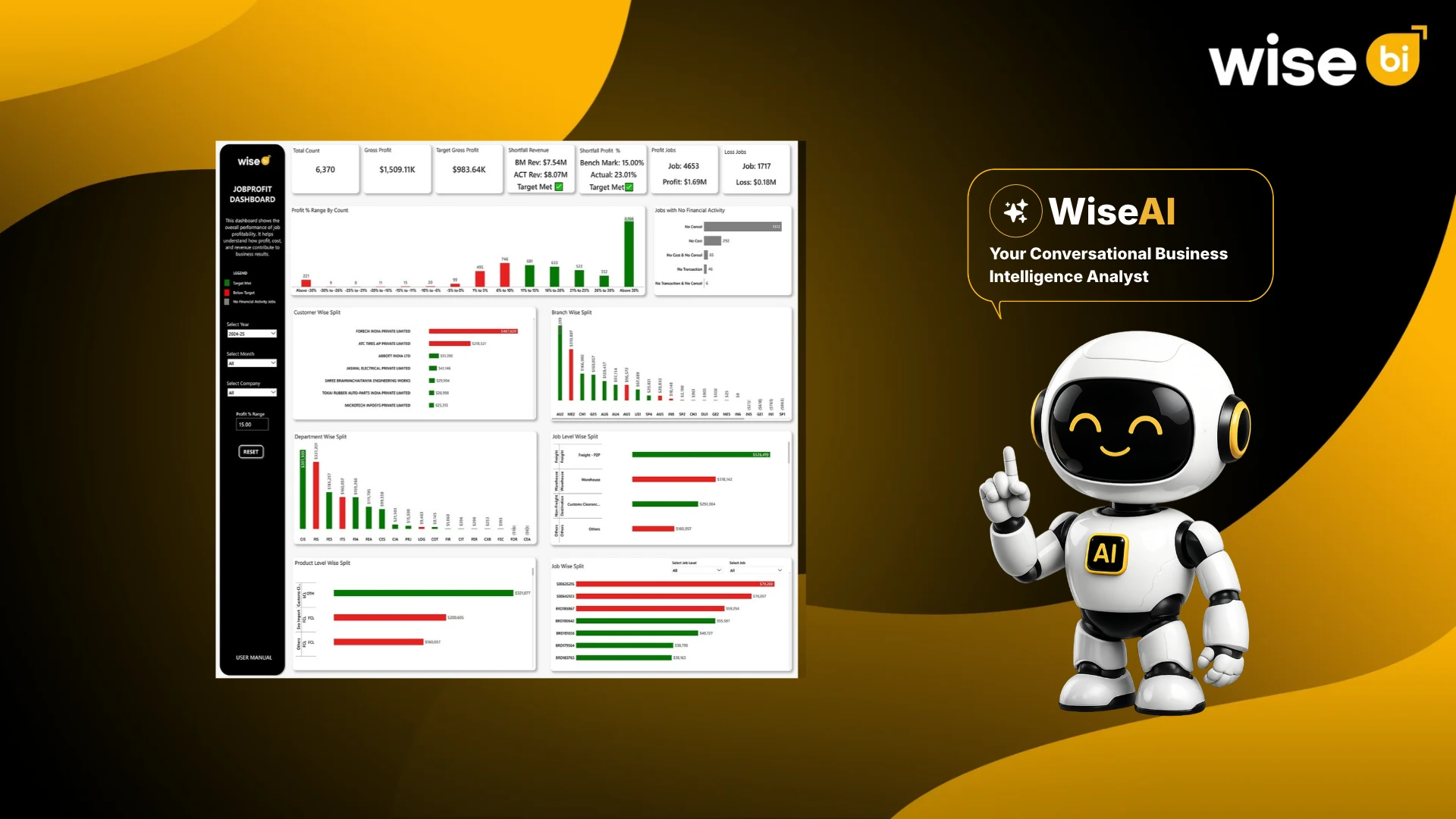
The Job Profit Dashboard helps finance teams investigate shipment-level revenue, costs, and gross profit. Financial Operations and P&L dashboards provide broader visibility into business performance.
WiseAI adds conversational analytics, allowing authorized finance users to ask questions about supported reporting data.
For example, finance teams could ask:
- “Which creditors have the highest outstanding accrual balances?”
- “Show jobs with revenue but no cost accrual this month.”
- “Which jobs have the largest accrued-versus-actual cost differences?”
Where the required data and measures are available, WiseAI can present results through charts, tables, and written insights.
These capabilities help finance teams identify relevant exceptions and investigate them more efficiently. However, finance teams should still verify accounting entries and adjustments against CargoWise transactions before finalization.
Conclusion
Make month-end close more predictable
Freight accruals make month-end closing challenging because shipment activity, customer billing, and supplier invoices don’t always follow the same timeline.
Accrual dashboards help finance teams identify missing costs, aging balances, and creditor variances before they affect finalized financial reporting.
With WiseBI dashboards and WiseAI, freight forwarders can improve visibility into financial exceptions, support more structured pre-close reviews, and strengthen confidence in reported profitability.
Want better visibility into your freight forwarding financial data before month-end?
Book a free demo with WiseBI to explore how WiseBI dashboards and WiseAI can support your CargoWise financial reporting needs.