


Revenue is recorded when the invoice is raised, but cash flow improves only when the customer pays.
A completed freight job does not mean the cash has been collected. Once an invoice is raised, finance teams need to know which customers are due to pay, which invoices are overdue, and where collection action is needed.
The faster your business can identify delayed payments and prioritize the right accounts, the sooner it can turn outstanding revenue into available cash.
That is where overdue payments can become a persistent challenge for freight forwarders.
With multiple shipments, customers, invoices, payment terms, and billing requirements moving at the same time, a few delayed payments can quickly become a growing receivables problem. The obvious response may be to send more reminders, but effective collections start much earlier.
Reducing overdue customer payments means understanding why invoices are delayed, identifying problems sooner, prioritizing the right accounts, and giving finance teams enough information to take the right action.
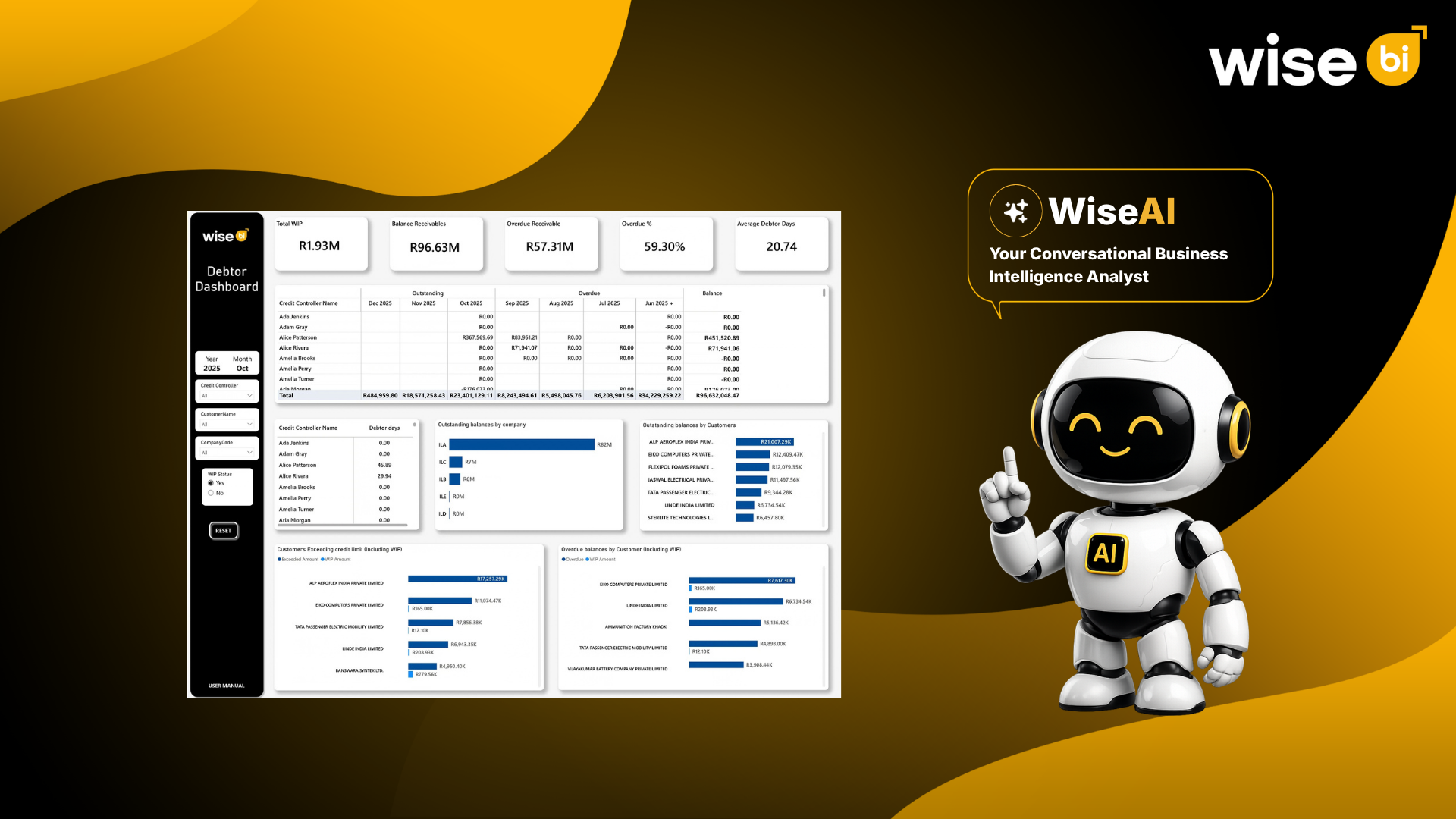
Here is how freight forwarders can build a more effective approach using WiseBI’s Accounts Receivable Dashboard to improve cash flow, monitor outstanding invoices, identify overdue payments, and make faster, data-driven decisions.
Where do Overdue Payments Actually Begin?
Not every overdue invoice is caused by a customer simply refusing or forgetting to pay.
Payment delays can begin with something as basic as incorrect billing information. An invoice may be missing a required reference, sent to the wrong contact, questioned because of an unexpected charge, or held while supporting documentation is requested.
Other invoices become overdue because follow-up starts too late or a dispute remains unresolved between departments.
That means the first question should not always be:
“Why hasn’t the customer paid?”
Sometimes the better question is:
“Is there anything preventing the customer from processing this invoice?”
Finding the actual cause helps teams determine whether the next step should be a payment reminder, corrected documentation, dispute resolution, or a more direct collection conversation.
Get the Invoice Right Before the Clock Starts
Reducing overdue receivables starts before the due date.
Freight forwarding invoices can contain multiple job-related charges, and customers may have their own billing requirements. A small discrepancy can hold up an otherwise routine payment.
Before sending an invoice, teams should confirm details such as:
- Correct customer and billing entity
- Agreed payment terms
- Invoice and due dates
- Purchase order or customer references
- Freight and service charges
- Required supporting documents
- Correct accounts payable contact
This is more than an administrative check. Every preventable invoice query adds another step between completing the job and collecting the cash.
Getting the invoice right the first time gives the customer fewer reasons to delay approval.
Don’t Wait Until Month-End to Start Collecting
A monthly accounts receivable management report review can tell you what has already gone wrong. But it is far less useful when an invoice has been overdue for several weeks before anyone notices.
A stronger approach is to monitor invoices throughout their payment cycle.
For example:
Approaching due date: Check whether there are unresolved documentation or billing questions.
Recently overdue: Confirm that the customer received the invoice and determine its payment status.
Continuing overdue: Identify the reason for non-payment and follow up on any commitment or dispute.
Long overdue: Escalate according to the company’s credit and collection process.
The objective is not to chase every customer before an invoice is due. It is to prevent overdue balances from quietly aging without attention.
Build a Collection Rhythm that Customers Understand
Collections become harder when follow-ups are inconsistent.
One customer may receive several reminders in a week, while another overdue account receives no contact for a month. Internally, different team members may also be unsure about when an account should be escalated.
A defined collection rhythm creates consistency.
The process can move logically from:
Due soon → Due → Overdue → Follow-up → Escalation
The exact timing will depend on your payment terms, customer relationship, and credit policy. What matters is that finance teams know what action should happen next.
It also creates a more professional experience for customers. Follow-ups become part of a structured process rather than a sudden series of urgent emails once a balance has become seriously overdue.
Not Every Overdue Customer should be Treated the Same
Imagine two customers each owe $25,000.
One customer’s invoice became overdue three days ago, and the account normally pays within agreed terms. The other customer’s balance includes several invoices that have been outstanding for weeks.
The dollar value is the same. The collection priority isn’t.
Freight forwarders can prioritize overdue receivables by looking at several factors together:
- Overdue amount
- Aging days
- Total outstanding balance
- Historical payment behavior
- Open disputes
- Credit exposure
- Ongoing business activity
This gives finance teams more context than simply sorting an overdue report from the largest balance to the smallest.
It also helps collectors focus their time where delayed payment presents a more immediate concern.
Track for Changes in Customer Payment Behavior
A customer does not need to miss several payments before there is something worth investigating.
Sometimes the earliest signal is a gradual change in payment behavior.
A customer that normally settles invoices close to its agreed terms might begin taking progressively longer. The account may not yet appear particularly risky, but the trend deserves attention.
This is where debtor days and receivables aging become useful.
Instead of asking only:
“How much does this customer owe?”
Finance teams can also ask:
“Is this customer taking longer to pay than they used to?”
That additional context can help identify changing collection patterns before they turn into a much larger overdue balance.
Connect Collections With Customer Credit Decisions
Collection activity should not be viewed separately from customer credit exposure.
Suppose a customer already has a growing overdue balance while new shipments continue to generate additional business. The collections team may be working on old invoices while the company’s overall exposure to that account continues to increase.
This is why finance teams should consider the relationship between:
Outstanding receivables + Overdue balance + Credit limit + WIP
Work in progress and outstanding invoices are different financial measures, but reviewing them together can provide useful context around the customer relationship.
If an account is approaching or exceeding its approved credit limit while payment performance is also weakening, finance and commercial teams have a clearer reason to review the situation together.
Give Collectors the Full Story Before they Contact the Customer
Collection conversations are more productive when the person making the call or sending the email already understands the account.
Before contacting a customer, the collector should be able to see relevant details such as:
- Invoice number
- Invoice date
- Due date
- Original invoice value
- Amount already paid
- Remaining balance
- Aging days
- Current transaction status
This sounds straightforward, but it matters.
If a customer asks which invoice is overdue or says a partial payment has already been made, the collector should not have to search through multiple spreadsheets or ask another department before responding.
Clear transaction-level information helps keep the conversation focused on resolving the payment.
Where does an Accounts Receivable Dashboard Fit in Your Business?
An accounts receivable dashboard should support the collection process, not replace it.
For freight forwarders using CargoWise, a connected dashboard fits into the receivables and collection process by helping finance teams move from the overall receivables position to the specific account that requires attention:
Receivables → Overdue Amount → Customer → Aging → Credit Exposure → Transaction
This makes it easier to identify where overdue balances are concentrated and investigate the details behind them.
More importantly, the dashboard gives different teams across your business a consistent view of receivables. Finance teams can spend less time assembling information and more time deciding which collection action makes sense.
Conclusion
Reduce overdue payments before they become bigger problems.
Reducing overdue customer payments is not simply about chasing invoices harder. It is about removing avoidable payment barriers and acting before small delays become larger collection problems.
For freight forwarders, that means issuing accurate invoices, monitoring due dates throughout the month, maintaining consistent follow-ups, recognizing changes in customer payment behavior, and considering credit exposure alongside collections.
The most useful question for finance teams is not simply “How much is overdue?” It is “What is causing the delay, which account needs attention first, and what should we do next?”
When those answers are easy to find, collection activity becomes more focused, and overdue receivables become easier to manage.
Using CargoWise but still spending too much time tracking overdue payments manually? Book a free demo with WiseBI to see how your finance and credit teams can gain clearer visibility into overdue receivables, debtor days, customer exposure, and the transactions that need attention.