


Experience has always played an important role in logistics leadership. A freight forwarding CEO can recognize a difficult trade lane, anticipate seasonal demand, or identify a valuable customer relationship through years of industry knowledge.
But experience alone cannot reveal everything happening across hundreds of shipments, customers, branches, and financial transactions.
A customer may appear profitable while the cost of servicing their shipments continues to increase. A busy branch may generate more revenue but contribute less gross profit. These differences aren’t always visible through daily operational discussions.
That’s where AI-powered business intelligence becomes valuable. AI helps logistics leaders examine actual performance, identify emerging risks, and make decisions supported by business data.
The goal isn’t to replace leadership experience but to make that experience more effective with timely, reliable information.
Why is Gut Feeling Alone No Longer Enough in Logistics?
Freight forwarding decisions involve multiple factors, including customer demand, carrier costs, shipment volumes, working capital, and operational capacity. Leaders often develop strong instincts about these areas through years of experience.
However, as a logistics business grows, relying only on personal observations becomes increasingly difficult.
A branch manager may report strong shipment activity, but shipment count doesn’t necessarily indicate profitability. Similarly, a long-standing customer may continue booking freight while gradually reducing shipment volumes or delaying invoice payments.
Without examining these patterns, management may overlook changes that affect business performance. Data-driven leadership helps decision-makers validate their assumptions, recognize unexpected developments, and prioritize issues based on measurable evidence.
What does Data-Driven Leadership Mean for Logistics Businesses?
Data-driven leadership means using relevant business information to guide decisions rather than depending entirely on assumptions or historical experience.
For freight forwarders, this involves reviewing operational and financial performance together. Shipment volumes show how much cargo moves through the business, while revenue and gross profit indicate commercial performance.
Customer activity and outstanding receivables provide additional insight into business relationships and cash flow. These measurements become more valuable when leaders can compare them across branches, customers, transport modes, and reporting periods.
However, data-driven leadership isn’t simply about having more BI dashboards. It requires understanding what the numbers mean, identifying what deserves attention, and deciding how the organization should respond.
The Role of AI in Logistics Decision-Making
Traditional BI dashboards help management monitor established KPIs. AI-powered business intelligence analytics extends that capability by making information easier to investigate, compare, and interpret.
Identifying Performance Changes Earlier
AI-powered reporting can help leaders identify changes in shipment volumes, revenue, costs, and customer activity.
For example, a decline in gross profit may not be immediately obvious when overall revenue continues to grow. By comparing financial performance across periods and business segments, management can investigate whether rising costs or changes in customer activity contributed to the decline.
Understanding the Reasons Behind Business Results
Knowing that profitability declined is useful. Understanding which branches, customers, or services contributed to the change is more valuable.
AI-assisted analysis helps managers explore these relationships through comparisons, visualizations, and follow-up questions. This gives leadership teams a clearer starting point for investigating operational and financial performance.
Supporting Forward-Looking Planning
Historical reports explain what has already happened, while forecasting and predictive analytics help management explore possible future developments based on available data.
For example, shipment volume forecasts can inform discussions about staffing, warehouse capacity, and operational resources. These insights support planning when considered alongside confirmed bookings, market conditions, and management experience.
Five Leadership Decisions AI Can Help Improve
1. Protecting Profitability Across the Business
Higher revenue doesn’t always translate into stronger profitability. Freight forwarders need visibility into revenue, costs, and gross profit across jobs, customers, branches, and transport modes.
AI-powered analysis can help identify where margins are declining and which business areas deserve closer review. Leaders can then investigate pricing, supplier costs, or operational efficiency before making commercial decisions.
2. Identifying Customer Retention Risks
Customer relationships often change gradually. A customer may reduce shipment frequency, move cargo through different trade lanes, or generate less revenue over several months.
AI-supported customer analysis helps sales leaders identify these changes and prioritize accounts for further investigation. Rather than waiting until a customer stops booking, teams can use the available information to initiate timely conversations.
3. Improving Cash Flow Visibility
Freight forwarders frequently pay carriers and service providers before receiving customer payments. When outstanding accounts receivable increase, management needs to understand which accounts contribute to the exposure.
AI-powered financial analysis can help identify overdue balances, customer payment trends, and changes in debtor performance. Finance leaders can use these insights to prioritize collection reviews and evaluate credit exposure.
4. Planning Operational Resources
Shipment workloads vary across branches, departments, and transport modes. A higher number of shipments doesn’t necessarily represent greater cargo volume, just as fewer shipments don’t always mean less operational work.
Analyzing TEUs, cubic meters, air freight tonnage, and job activity helps operations leaders understand workload patterns. These insights can support staffing discussions, capacity planning, and coordination across operational teams.
5. Evaluating Branch and Department Performance
Company-wide results can hide significant differences between business units. One branch may generate strong revenue but experience increasing operating costs, while another may handle fewer shipments and maintain healthier margins.
AI-assisted comparisons help leadership teams examine these differences using consistent reporting definitions. This supports more focused branch performance analysis and informed discussions with branch managers.
How does WiseAI Support Data-Driven Logistics Leadership?
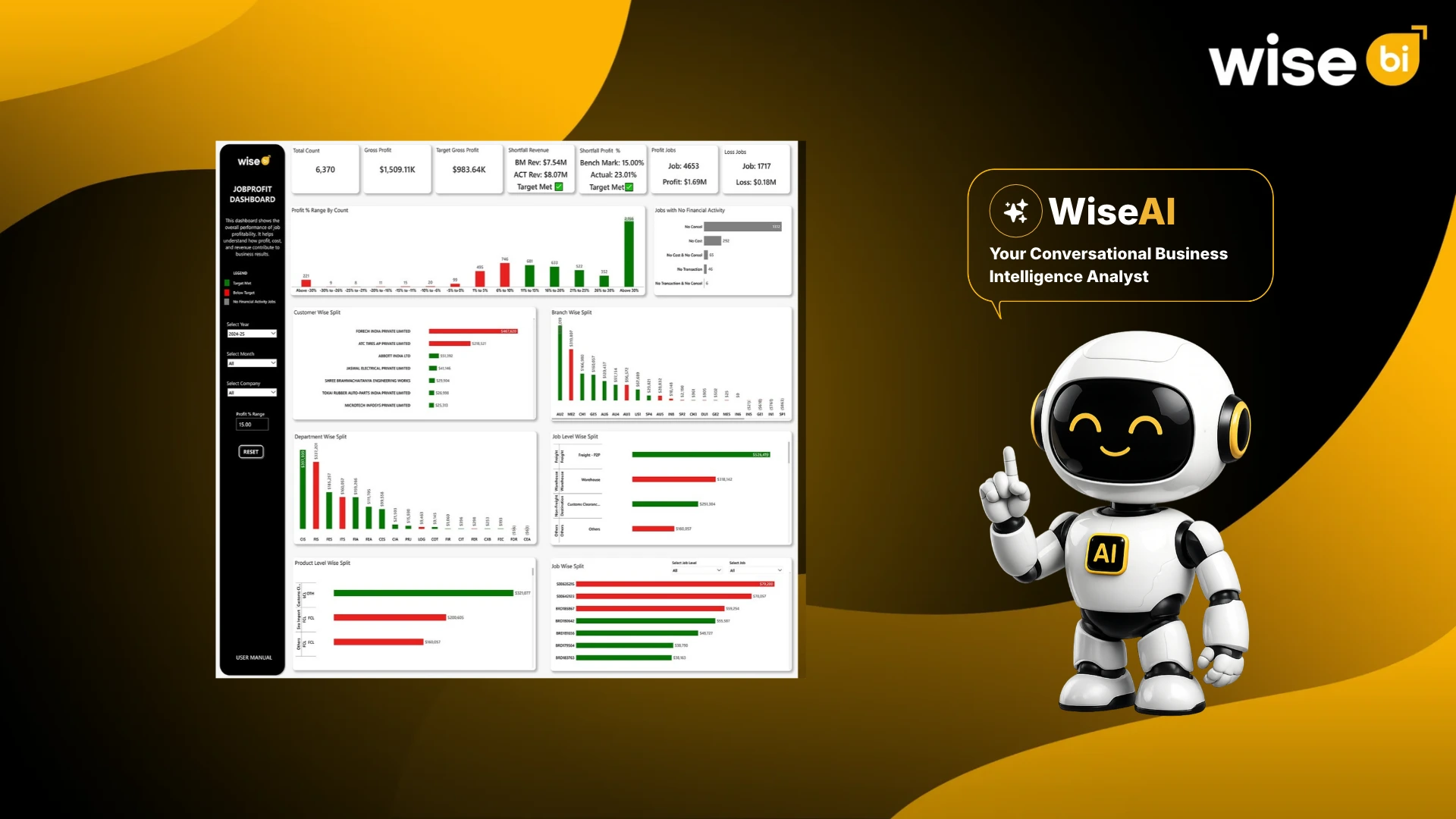
For businesses using CargoWise, WiseAI brings AI-powered data intelligence into the WiseBI reporting environment.
Instead of relying only on predefined reports, authorized users can ask questions about connected business data and investigate the answers.
Ask Questions and Explore Business Performance
A CEO could ask, “Which branches experienced the largest decline in gross profit this quarter?”
WiseAI can present supported results through charts, tables, and written insights. Leaders can continue with follow-up questions to explore relevant customers, departments, or reporting periods.
This makes business analysis more conversational and accessible to management teams without requiring technical reporting knowledge.
Turn Data Into Visual Insights and Recommendations
WiseAI supports AI-generated dashboards, performance comparisons, written insights, and recommendations. These capabilities help management understand patterns and evaluate potential next steps.
Rather than reviewing disconnected figures, leadership teams can examine related information within a structured analytical discussion.
Anticipate Risks and Opportunities
WiseAI’s forecasting and configurable alert capabilities can help management explore future trends and monitor selected business conditions.
These tools can support reviews of potential shipment demand, revenue changes, customer risks, and resource requirements. The available functionality depends on the connected data and implementation configuration.
Make Insights Accessible Across Teams
WiseAI supports conversation history, downloadable reports, and mobile-friendly access. These capabilities help employees explore information, revisit findings, and communicate results across departments.
The objective is to make business intelligence useful beyond the reporting team, including for executives, finance managers, operations leaders, and sales teams.
Why Data Security Matters in AI-Powered Leadership?
Logistics leaders work with commercially sensitive information, including customer revenue, shipment costs, profitability, and financial transactions. AI-powered business intelligence must therefore support appropriate access controls and data governance.
WiseAI is designed around four principles: read-only access, role-based control, verifiable answers, and a full audit trail.
Read-only access prevents the assistant from changing CargoWise business records. Configured permissions govern access to reporting information, while supporting figures and visualizations help users examine analytical results.
Logging and audit-related controls provide additional oversight of system activity. These safeguards depend on the organization’s deployed security configuration and help establish a more controlled environment for AI-assisted analysis.
Building a Data-Driven Leadership Culture
Introducing AI-powered analytics doesn’t automatically make an organization data-driven. Leadership teams also need consistent KPI definitions, reliable data, and a clear process for turning findings into decisions.
A practical starting point is to identify the business questions management asks most frequently. These might concern declining profitability, overdue customer balances, changes in shipment demand, or branch performance.
Next, establish which KPIs support those decisions and ensure the underlying reporting information is reliable.
Finally, make performance analysis part of regular management discussions. When leaders consistently examine results, investigate changes, and assign appropriate actions, business intelligence becomes part of everyday decision-making rather than a separate reporting exercise.
Conclusion
Combine leadership experience with AI-powered insights.
Strong logistics leadership has never depended on numbers alone. Industry knowledge, customer relationships, and operational experience remain essential.
AI adds another dimension by helping leaders understand business performance, recognize changes, and explore potential risks and opportunities.
With WiseBI’s CargoWise dashboards and WiseAI, freight forwarders can bring operational and financial information into their management decisions without relying entirely on manual reporting.
The result is a more informed approach to leadership, where experience guides decisions and data provides the evidence to support them.
Ready to make more informed decisions using your CargoWise data?
Schedule a free demo to explore how WiseBI can support data-driven leadership across your logistics business.